
NSPIREDLIFE.CO.UK ≡ The Fowl Life Bridal & Party New Arrivals Freebase Nicotine
  • Madagascar Polished

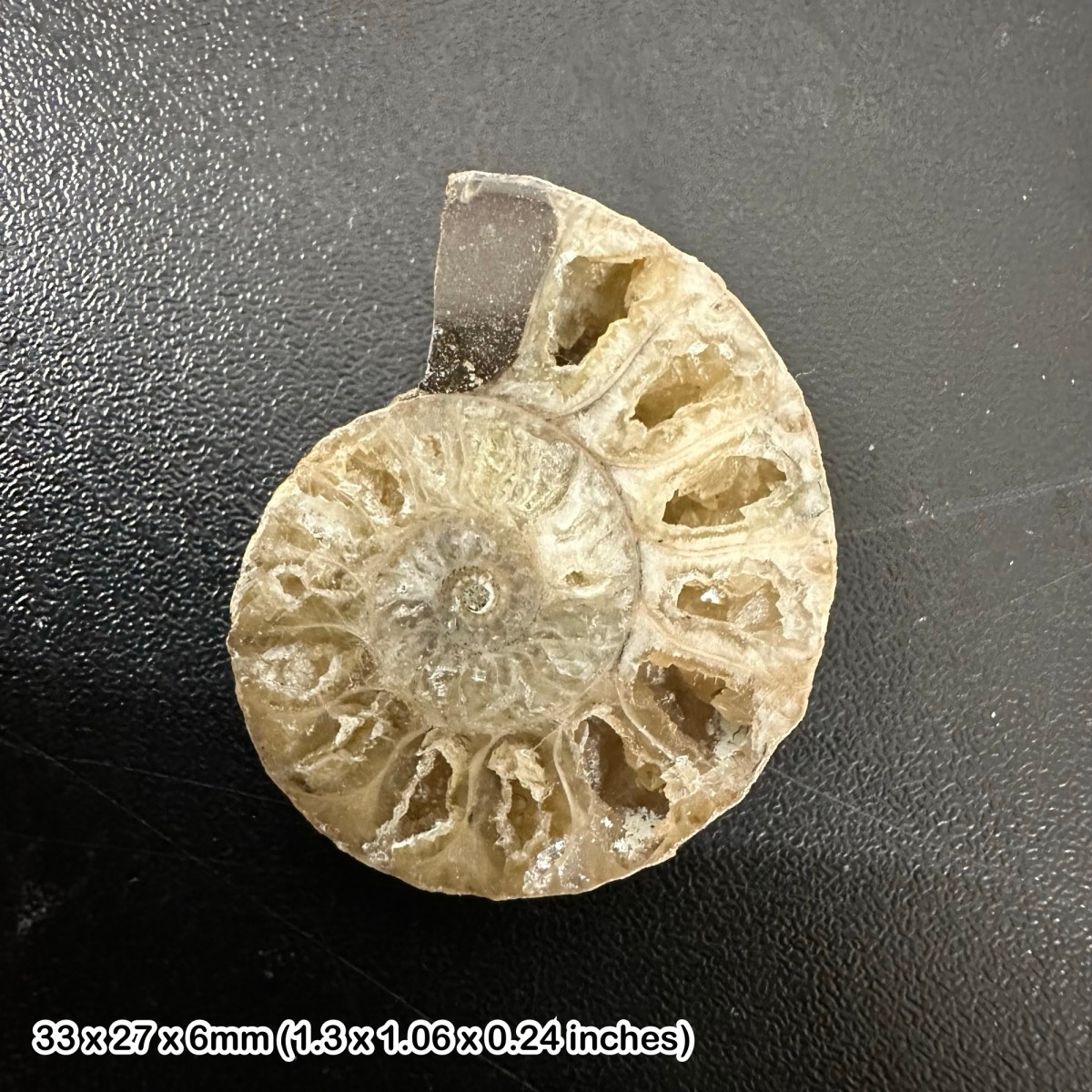
  • Cretaceous Ammonite Fossil – Genuine Madagascar Spiral Shell – Ancient Marine Cephalopod with Certificate of Authenticity

Cretaceous Ammonite Fossil – Genuine Madagascar Spiral Shell – Ancient Marine Cephalopod with Certificate of Authenticity

$11.02 $13.88
All of our Fossils are 100% Genuine Specimens & come with a Certificate of Authenticity **Please note: Some Fossils maybe propped up for photo purposes** Specimen: Ammonite Age: Cretaceous Location: Madagascar Size (picture scale cube=1cm): 43 x 10 x 36mm (1.69 x 0.39 x 1.42 inches) Ammonites are one of the most recognisable fossils around, this is due to their familiar spiral shape shell, reminiscent of what we know as a snail shell, though these creatures are not related to snails at all! They were marine animals, present between 240 – 65 million years ago, who had a coiled external shell similar to that of the modern nautilus, and although they resembled a modern day nautilus, these molluscs are more closely related to living coleoids i.e. octopuses, squid, and cuttlefish. These creatures varied in size, ranging from only a few millimetres to some fossils being found measuring a whopping 8 feet 96 inches. ACTUAL AS SEEN: The image shows the EXACT specimen you will receive. The specimen has been carefully hand selected and photographed. Measurements are as accurate as possible, though be aware measuring precise dimensions can be difficult from irregular shaped items. Whilst we portray colours as close to life-like as we can, colours will vary if taken in sunlight, indoors, from monitor to monitor and device to device. Once this specimen is sold, we will update this listing with new similar selected item, with a new photo and dimensions. What is a fossil? The word Fossil used to be defined as ‘something dug up’. Now-a-days it generally means ‘The remains or trace evidence of prehistoric life’. The study of fossils is called palaeontology; someone who collects and studies them is called a palaeontologists. Fossils can be as tiny as a grain of pollen or a seed for e.g. or as huge as a limb bone from a giant dinosaur. For animal or plant remains to have become ‘fossilised ‘, they must go through a certain process that preserves them for up to millions of years after they have died. Usually it is only the hard parts of plants and animals that survive this long process. How Fossils Formed   The most common method of how fossils formed is once an animal or plant dies, it falls to the ground, and is covered by sediment. This is often sediments brought from water. In the diagram above, the ammonite died in a river, and sediments over time covered the ammonite (shown in the second diagram). Finally after hundreds of thousands, or millions of years, the land is eroded and the fossil can be seen. Of the vast amount of prehistoric life that died, it is only a tiny amount that has survived the fossilisation process. The conditions when the majority of life died were just not right at that time, to preserve them. Most fossils are found in sedimentary rocks which were formed from the sediments of rivers, lakes and seas. The majority of the animal and plant fossils we find today, had originally died near these areas, got broken up and deposited on the beds of the rivers, lakes and seas. The sediments covered them and over time some of the layers grew so thick that many of them got crushed. The sediments compacted and over time and turned to rock. The rocks shifted, moved and became exposed to the elements. This process can take up to several hundred million years. Now as the rocks erode or are quarried for example the fossils become exposed and can be collected. The Best conditions for Fossilisation 1. The quick burial of animal remains in moist sediments. This prevents scavengers from eating and bacteria from decaying them. 2. The quick burial in volcanic ash. Many dinosaur bones in the American west have been found buried in volcanic ash. 3. The presence of hard body, plant parts, teeth, bones, shell or wood for example 4. Unchanging temperature conditions. 5. Ground water that is heavily mineralised. 6. Sediments that are very fine make a better burial than coarser gravels. 7. Calm conditions, so that remains are not broken (up by wave or currant action for example).
Madagascar Polished

Madagascar Polished

  • Polished ammonite fossil pair – genuine cut cretaceous cephalopod – madagascar – matched fossil halves with certificate of authenticity
    $17.44 $24.77
  • Cretaceous ammonite fossil – polished half – madagascar – vibrant chambered shell – genuine specimen with certificate
    $14.69 $28.35
  • Polished Ammonite Fossil Pair – Genuine Cretaceous Ammonites from Madagascar – Cut & Polished Spiral Shells with Certificate of Authenticity
    $21.6 $41.04
  • Polished Cleoniceras Ammonite Fossil from Madagascar – Genuine Cretaceous Marine Fossil with Certificate of Authenticity
    $12.15 $14.82
  • Polished Ammonite Fossil Half – Genuine Cretaceous Cephalopod – Madagascar – Beautiful Cut & Polished Specimen with Certificate
    $12.85 $24.03
  • Fossilised ammonite half, cut & polished, madagascar cretaceous, genuine, certified
    $32.13 $53.34
  • Cleoniceras Ammonite Fossil – Genuine Cretaceous Specimen from Madagascar – Natural Prehistoric Shell – With Certificate of Authenticity
    $13.61 $25.99
  • Cut & Polished Ammonite – Single Section
    $22.44 $38.82
  • Single Section of Cut and Polished Marine Ammonite Fossil – Stunning Natural Art
    $12.24 $22.4
  • Cretaceous Ammonite Fossil – Genuine Madagascar Spiral Shell – Ancient Marine Cephalopod with Certificate of Authenticity
    $11.02 $13.88
  • Polished ammonite fossil pair from madagascar – cretaceous age – genuine sliced ammonite with visible chambers – certificate included
    $19.44 $30.72
  • Polished ammonite fossil pair – cut & matched halves – cretaceous madagascar – genuine fossil with certificate of authenticity
    $17.44 $30.87
  • Fossilized ammonite half cut & polished genuine specimen cretaceous madagascar *certificated*
    $32.13 $48.2
  • Ammonite fossil pair – genuine cretaceous ammonites from madagascar – polished spiral shells with certificate of authenticity
    $11.34 $21.66
  • Cretaceous ammonite fossil pair – polished halves from madagascar – genuine marine cephalopod with certificate
    $13.77 $26.16
  • Cleoniceras ammonite fossil half – genuine cretaceous polished fossil from madagascar – colourful chambered shell
    $34.02 $64.64

© 2026 - NSPIREDLIFE.CO.UK