
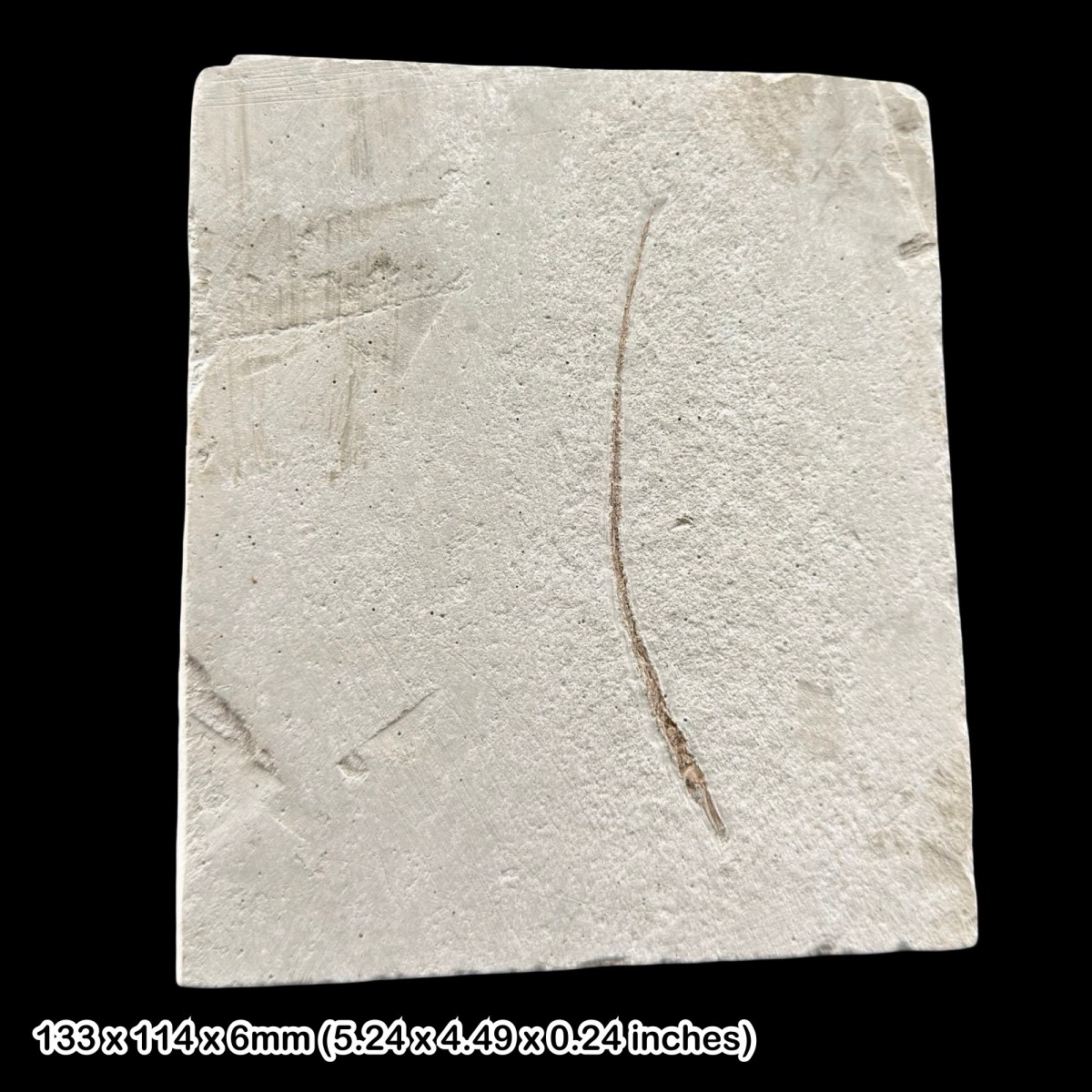
Fossil Syngnathus Pipe Fish Pliocene Italy Marecchia Valley Fish Fossil Specimen
$45.55
$60.58
Fossil Syngnathus Pipe Fish from the Messel Formation This genuine Syngnathus sp. pipe fish fossil originates from the world-renowned Messel Formation near Messel in Hesse, Germany, dating to the Eocene Epoch during the Lutetian Stage, approximately 47 million years ago. Fossils from the Messel site are internationally celebrated for their exceptional preservation and scientific significance, representing one of the most important fossil Lagerstätten known. Pipefish fossils from Messel are particularly fascinating because they belong to the family Syngnathidae, the same group that includes modern pipefish and seahorses. Their distinctive elongated body shape and narrow tubular snout make them immediately recognisable among fossil fishes. Specimens preserved within the fine-grained sediments of the Messel Formation often show remarkable anatomical detail, providing valuable insight into the early evolution of this unique group of fishes This carefully selected specimen represents a beautifully preserved relic of the ancient freshwater ecosystems that once existed in central Europe during the Eocene. Geological Setting of the Messel Formation The fossil originates from the Messel Formation, which was deposited within a volcanic maar lake formed during the Eocene. This ancient lake developed in a crater created by volcanic activity, eventually filling with deep, stratified water surrounded by subtropical forests. The Messel deposits consist primarily of organic-rich oil shales, formed by the slow accumulation of fine sediment and organic matter at the bottom of the lake. These sediments were laid down under anoxic conditions, meaning that oxygen levels near the lakebed were extremely low. Such conditions prevented scavengers and bacterial decay from destroying organic remains, allowing fossils to be preserved in extraordinary detail. Because of this exceptional preservation, the Messel Pit Fossil Site is designated a UNESCO World Heritage Site, renowned for yielding an extraordinary diversity of fossil organisms including fish, reptiles, birds, insects, plants, and early mammals. Classification and Biological Background Syngnathus belongs to the order Syngnathiformes and the family Syngnathidae, a group of fishes characterised by their elongated bodies, fused jaws forming a tubular snout, and bony body rings. Modern pipefish and seahorses are known for their unique reproductive biology in which males carry fertilised eggs in a brood pouch, a trait that may have been present in early members of the group. Fossil specimens from Messel provide important clues about the early development of these anatomical and behavioural adaptations. The genus Syngnathus was formally described by the Swedish naturalist Carl Linnaeus, and fossil representatives demonstrate that the distinctive pipefish body plan had already evolved by the Eocene. Morphology and Distinctive Features Pipefish fossils are recognised by their distinctive skeletal structure and elongated body form. Key anatomical features commonly visible in well-preserved specimens include: Long slender body composed of bony rings Narrow tubular snout adapted for suction feeding Small dorsal fin used for propulsion Reduced pelvic fins Segmented skeletal structure characteristic of syngnathid fishes These fishes likely fed on small crustaceans and planktonic organisms, using their tubular snout to create suction that pulled prey into the mouth. The calm depositional environment of the Messel lake allowed delicate fish skeletons to settle on the lakebed with minimal disturbance, preserving fine skeletal details. Eocene Lake Ecosystem of Messel During the Lutetian Stage of the Eocene, the region surrounding Messel supported lush subtropical forests and a warm climate. The volcanic crater lake at Messel became a unique ecosystem inhabited by fish, aquatic insects, amphibians, reptiles, birds, and early mammals. Periodic overturn events within the deep lake released toxic gases that could rapidly kill animals near the water surface. These organisms would sink to the lake bottom, where oxygen-poor conditions ensured exceptional fossil preservation. Fish such as Syngnathus inhabited the lake and its surrounding waterways, forming part of a diverse aquatic ecosystem preserved within the oil shale sediments. Authentic Fossil Specimen This fossil is a genuine Syngnathus pipe fish fossil from the Messel Formation of Hesse, Germany. The specimen has been carefully selected for quality and display appeal. The photograph shows the actual fossil specimen you will receive, allowing collectors to clearly see the preserved fossil fish and its natural matrix. Full sizing please see photo. Certificate of Authenticity This fossil includes a Certificate of Authenticity lifetime guarantee generic card, confirming that the specimen is a genuine natural fossil. Fossils from the Messel Formation are among the most scientifically important fossils in the world. A Syngnathus pipefish from this UNESCO-listed site represents an extraordinary piece of Eocene natural history and a highly desirable addition to any fossil collection or educational display.
Fish