WARNING : This product contains nicotine, Nicotine is an addictive chemical.

Hangout, Chill & Vape

Sale!

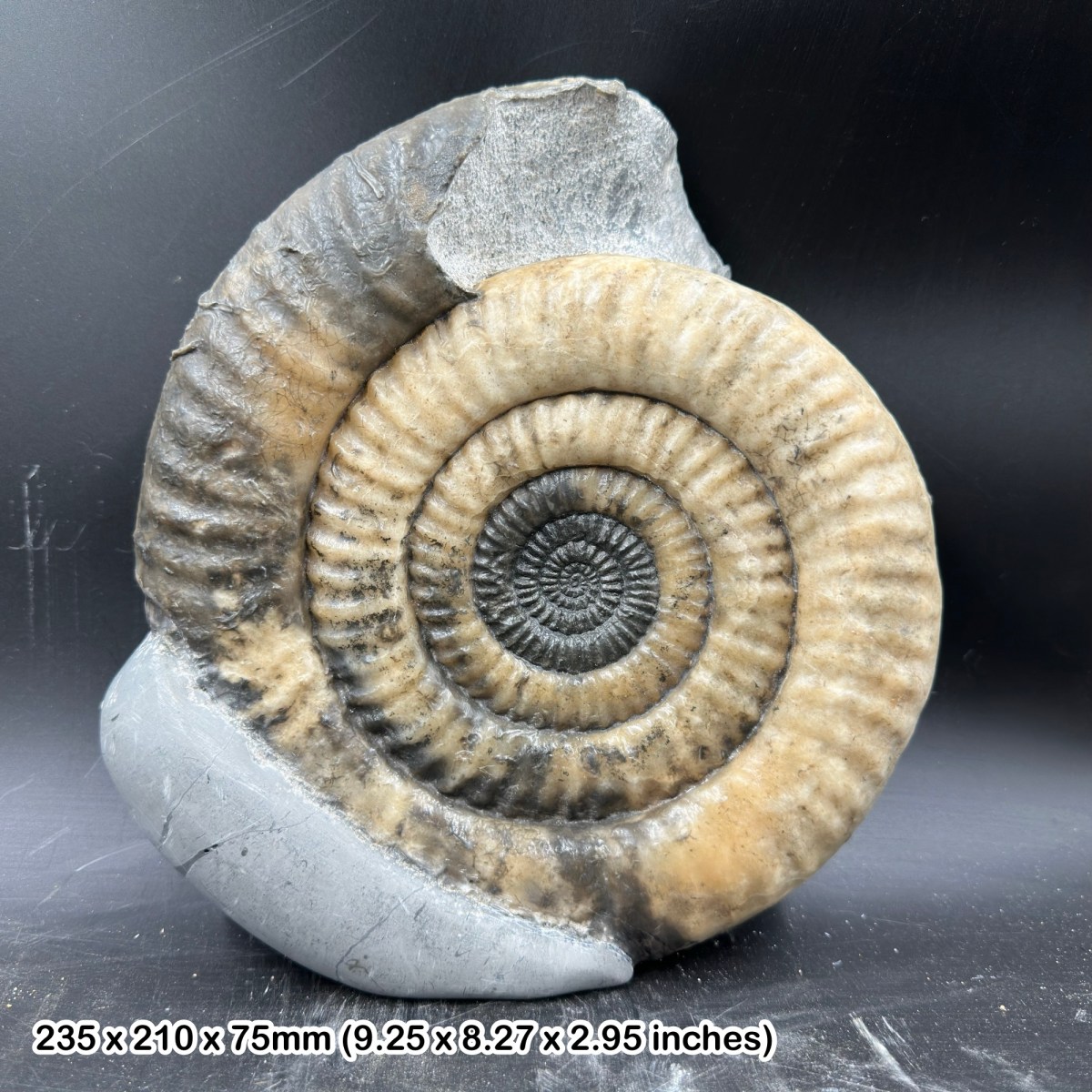
9″ Paracoroniceras Ammonite Fossil Lyme Regis Jurassic Rare Dorset Specimen Lower Lias Collector Ammonite with Signed COA

$ 39.30

Brand:
Description Rare 9 Inch Paracoroniceras Ammonite Fossil from Lyme Regis This impressive 9 inch Paracoroniceras ammonite fossil originates from the world-famous Monmouth Beach locality at Lyme Regis, Dorset, England, part of the internationally recognised Jurassic Coast UNESCO World Heritage Site. Dating to the Lower Jurassic Period within the Lower Lias Formation, this specimen comes from the Semicostatum Zone, one of the key ammonite biozones used by geologists to identify and correlate Early Jurassic rock layers. This is a genuine fossil ammonite, carefully selected for its size, preservation, and display quality. The photographs show the exact specimen you will receive, making it an ideal addition to a serious fossil collection or natural history display. The fossil measures approximately 9 inches across, creating an impressive visual centrepiece. The specimen includes a fully hand-signed Premium Certificate of Authenticity, confirming that the fossil is genuine and professionally verified. Please refer to the photographs for full sizing and scale. The ammonite shows minor restoration on the keel and centre, which has been carefully stabilised while preserving the natural appearance of the fossil. Geological Origin – Lower Lias Formation of the Jurassic Coast The fossil comes from the Lower Lias Formation, a sequence of marine limestones and clays deposited during the Early Jurassic approximately 199–190 million years ago. These rocks form the iconic cliffs along the Dorset coastline at Lyme Regis, one of the most important fossil localities in the world. During this time, southern England lay beneath a warm shallow epicontinental sea connected to the broader European marine basin. Fine marine sediments accumulated on the seabed, preserving the remains of marine organisms in exceptional detail. The Lower Lias exposures at Monmouth Beach are especially well known for producing abundant ammonites and other marine fossils including: Ichthyosaurs and plesiosaurs Belemnites Bivalves and gastropods Crinoids Numerous ammonite species The Semicostatum Zone, named after the ammonite Arnioceras semicostatum, represents one of the earliest Jurassic ammonite zones and is widely used in biostratigraphy. Paracoroniceras – Early Jurassic Ammonite Cephalopods The fossil belongs to the genus Paracoroniceras, an ammonite group typical of the earliest Jurassic marine faunas. Ammonites were marine molluscs closely related to modern squid, octopus, and nautilus, and they were among the most successful marine animals of the Mesozoic Era. Scientific Classification Kingdom: Animalia Phylum: Mollusca Class: Cephalopoda Subclass: Ammonoidea Order: Ammonitida Superfamily: Psiloceratoidea Family: Arietitidae Genus: Paracoroniceras Members of the Arietitidae are characteristic fossils of the Hettangian to early Sinemurian stages of the Lower Jurassic. Shell Morphology and Diagnostic Features Paracoroniceras ammonites possess a distinctive shell structure typical of early Jurassic arietitid ammonites. Their shells are strongly ribbed and moderately evolute, meaning the earlier whorls remain visible within the coil. Key morphological features include: A planispiral coiled shell with prominent ribbing Strong radial ribs extending across the whorls A pronounced ventral keel running along the outer edge of the shell Rounded whorl cross-sections Distinct internal chamber divisions separated by septa The internal chambers helped the animal regulate buoyancy through gas and fluid exchange, allowing the ammonite to move efficiently within the water column. The ribbed shell structure likely strengthened the shell while also influencing the animal’s hydrodynamics. Life in the Early Jurassic Seas During the Early Jurassic, the seas surrounding what is now the Dorset coastline supported thriving marine ecosystems. Ammonites such as Paracoroniceras were active swimmers that likely preyed on small marine organisms. These cephalopods probably fed on: Small crustaceans Planktonic organisms Juvenile fish Other marine invertebrates They themselves were prey for larger predators including marine reptiles and large fish inhabiting Jurassic seas. The abundance and rapid evolution of ammonites make them among the most important index fossils used in stratigraphy, helping geologists date marine sediments with remarkable precision. Fossil Preservation and Preparation After the ammonite died, its shell settled on the seabed and became buried in marine sediment. Over millions of years, sediment compaction and mineral replacement preserved the shell within the limestone matrix of the Lower Lias. The fossil retains the distinct ribbed shell structure and coiled geometry characteristic of Paracoroniceras. Minor restoration to the keel and centre has been carefully carried out to stabilise the specimen while maintaining its natural fossil appearance. The result is a large, display-quality Jurassic ammonite that retains both scientific and aesthetic value. Premium Certificate of Authenticity This fossil is supplied with a fully hand-signed Premium Certificate of Authenticity, confirming that the specimen is a genuine ammonite fossil from the Jurassic Coast. Each specimen is selected to ensure collectors receive authentic and scientifically significant fossil material. A Large Collector Ammonite from the Jurassic Coast Lyme Regis has been one of the most important fossil collecting sites in the world since the early nineteenth century. Fossils discovered along this coastline played a major role in the development of palaeontology and our understanding of prehistoric marine life. This 9 inch Paracoroniceras ammonite from Monmouth Beach represents a remarkable example of Early Jurassic marine life preserved within the Lower Lias sediments of Dorset. Its size, preservation, and historical geological provenance make it an outstanding addition to any fossil collection, museum display, or natural history cabinet.